
In this issue...
- Message from the Chair
- Psychosocial and financial impacts for carers of those with eating disorders in NZ
- What to feed a teen with an eating disorder
- Feast Webinar – De-escalating violence and aggression
- The Power of Family in Recovery – Video series
- Help for parents of children and teens suffering from Anorexia and other eating disorders
-
A
brand-new research project about recovery from adolescent Anorexia Nervosa
in NZ
- Upcoming support meetings

It helps to discuss how you can manage meal times, how to cope with visiting family members who may not be aware of the eating disorder, and to reassure your loved one that you are there to support them through their challenges. Easter is a great time to reconnect with family and friends and by removing the focus on food, we can help reduce the anxiety and stress and make Easter an enjoyable time for everyone.
I hope you find valuable information in all this month’s articles, but in particular you will find the results of a New Zealand study into the psychosocial and financial impacts for carers of those with eating disorders. Many of you may have taken part in this study by contributing your experiences; it is very interesting to view the results and the overall findings which identify some of the long-term impacts of caring for those with an eating disorder.
Wishing you all the best for the upcoming holidays
Tim Boyle
Chair, EDANZ
Psychosocial and financial impacts for carers of those with eating disorders in New Zealand
From Journal of Eating Disorders
Caring for a person with any significant health or disability condition can have a harmful effect on the carer’s own wellbeing. This study estimates this burden of caring for people with either ongoing ED symptoms or who have recovered, in New Zealand.

What to feed a teen with an eating disorder
From the No Way Weigh
"I fully understand how strange it feels to be reading labels on foods looking for the highest calorie choice. I had to do all of that and it rocked me to my core. But the thought of losing my daughter rocked me even harder. The goal is to get as many calories (and fat) as you can get in the smallest amount of food. The less volume the better."
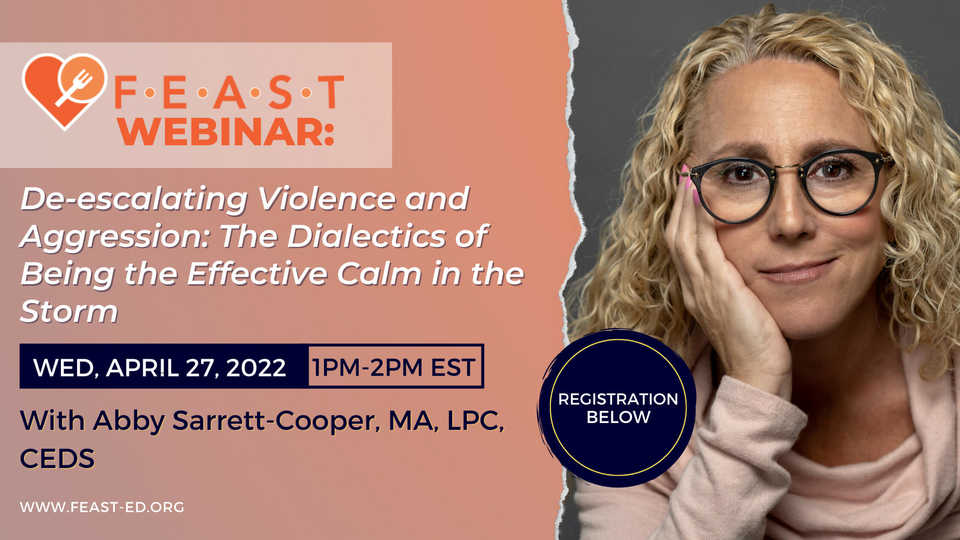
FEAST webinar – De-escalating violence and aggression
From FEAST
In this free webinar we will identify what pushes parents to go beyond their own limits, and what skills or resources to use within themselves, their home, and their community to prevent this. You will learn and practice resetting your fight or flight response. You will learn ways to step back physically along with established techniques of de-escalation. You will also have time to share your own experiences, ask questions and hear from a parent who went from calling emergency services to being the one on the other end of the phone when those services are called.
The Power of Family in Recovery
EQUIP x FEAST video series
“There is something really unique about getting support from someone who’s been in your shoes… When you’re validated by 100 other parents who say, 'been there, done that, got through it' – that’s what parents need.” - Judy Krasna
Help for parents of children and teens suffering from Anorexia and other eating disorders
Eva Musby
Family therapy (family-based treatment/FBT) for eating disorders:
"Parents, this site is for you. And clinicians, you'll find a wealth of resources here to help you deliver the best possible treatment."

Opportunity to be part of a brand-new research project about recovery from adolescent Anorexia Nervosa in NZ
This project explores the journey from ‘doing anorexia’ towards ‘doing wellbeing’ and how you changed as a person over this process. We will investigate what influenced your sense of identity (who you are) in relation to doing. Of particular interest will be the activities (or occupations) you did as you recovered, how and why these changed as you journeyed away from the illness towards wellbeing. We will explore what occupations became meaningful to you, what influenced you in becoming more yourself, and what ‘doing’ supported your wellbeing instead of the illness.
Who do we need:
We are looking for people who had anorexia nervosa as teenagers (age 12-18y), were treated in New Zealand between 2012 and 2019, and have now been recovered for at least 1 year.
What is required:
The research will involve one interview no longer than 90 minutes, online using Microsoft Teams.
What you share will help us understand what teenagers need as they recover, provide new insights into future research, and indications for treatments or supports that may be useful to help more people to make this journey into wellbeing.
Participant Information Sheet:
https://1drv.ms/w/s!Ak5UcGXeuTK3jT656lh4cQBZ4ldc
Consent form (by returning this form you are consenting to participate in this research project):
https://1drv.ms/w/s!Ak5UcGXeuTK3jUEnPppQ2HSU5k2TFor more information contact:
Maree Sievwright sievm1@student.op.ac.nz Student researcher
Sian E. Griffiths sian.griffiths@op.ac.nz Principal Lecturer/ Postgraduate Team Lead
School of Occupational Therapy, Otago Polytechnic/Te Kura Matatini ki Otago

Upcoming support group meetings
EDANZ believes parents/carers have unique abilities to support one another and we hold regular meetings to which you are warmly invited. Currently, we're joining together around the country once a month thanks to Zoom videoconferencing technology.
If you would like to participate in a virtual support group, please RSVP to info@ed.org.nz and we'll send you the link.
We alternate monthly between evening and daytime meetings.
Upcoming 2022 Dates:
- April: Friday 15th, 12pm-1pm
- May: Monday 16th, 7pm-8.30pm
- June: Friday 17th, 12pm-1pm
More information can be found on our website Parent/Carer Support Groups page
Remember: EDANZ helpline is open throughout all Covid 'traffic lights' – please don’t hesitate to contact us info@ed.org.nz or leave a message on the phone 0800 2 EDANZ and we will get back to you as soon as we can. If you are concerned about the safety of someone, please ring 111 or go to the Emergency Department of your nearest hospital.
Did you know, we receive no regular funding?
Many families have told us they consider our support to be essential and life-saving. However, we are a volunteer organisation and rely totally on donations and grants to provide our services – many of which are currently self-funded.
Demand for our services has reached unprecedented levels, but sadly donations are down as the pandemic has hit Kiwis hard over the past two years.
If you can, please consider donating to EDANZ
Your donation will enable us to continue our work providing support to families, education to healthcare providers and the community, and advocating for improved access to evidence-based treatment for all affected New Zealanders.