

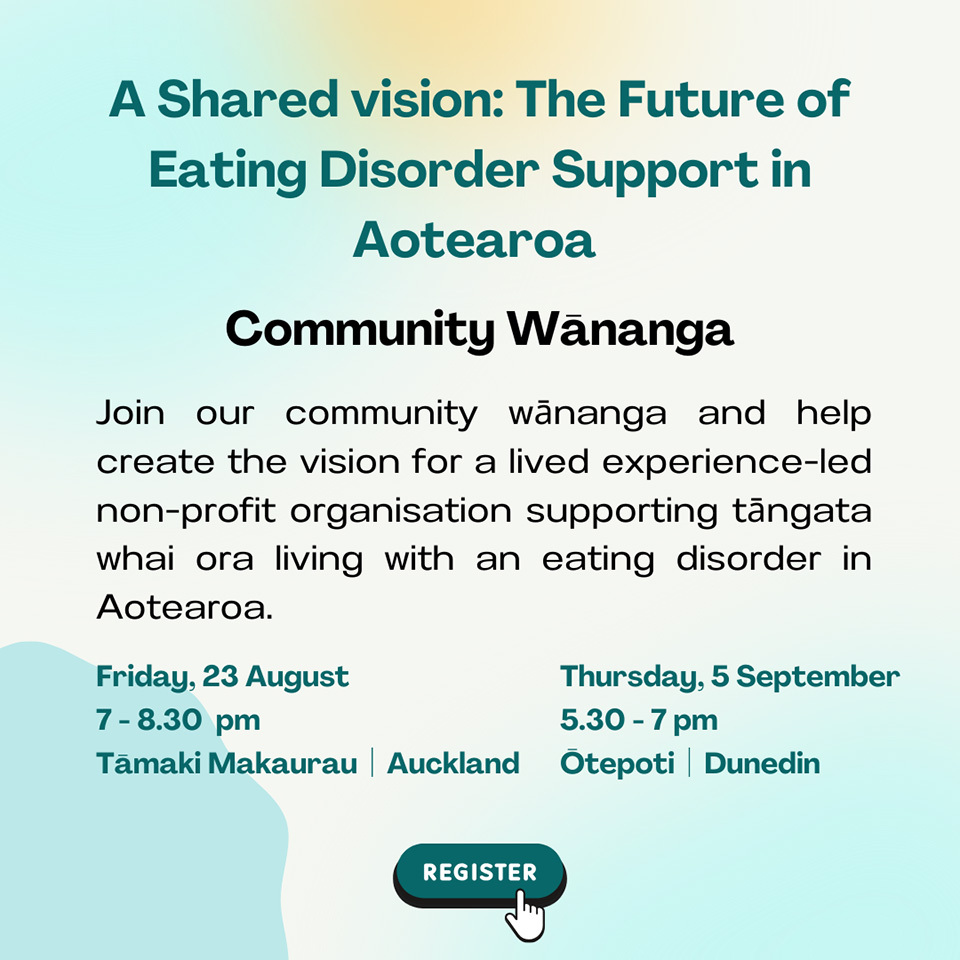
Help shape the future of eating disorder support in Aotearoa NZ!
Join our community wānanga to shape a non-profit supporting people with eating disorders in Aotearoa!
Register here! Spaces are limited
We invite anyone who has
- lived/living experience of an eating disorder
- lived/living experience supporting someone with an eating disorder
As well as
- clinicians
- researchers
to join us in shaping a lived-experience-led non-profit organisation offering advocacy, education, and peer support for people experiencing eating disorders.
The workshop will include both information and collaborative activities.
Be part of this journey. Your voice matters!

Update from the EDANZ co-development project
We are making great progress with the EDANZ co-development project, and we wanted to share some of the insights with you. The purpose of this project is to identify priorities for future research into the experience of caring for/supporting a loved one with an eating disorder.
The project is still ongoing, but we were thrilled to receive 132 responses to our survey! This represents a mix of people with lived experience as a carer/supporter, affected individuals, clinicians and researchers.

89% of respondents said that carer/supporter involvement is very important for the wellbeing of a person with an eating disorder.
Here are some words from our survey respondents:
“I just wish it was easier to access clinical help and that more people and professionals understood eating disorders” – Carer/supporter
“This is the hardest thing that as a parent we have ever done. Keep being the wonderful organisation that EDANZ is.” – Carer/supporter
“The impact that my eating disorder had on my parents and siblings was massive and I wish there had been more understanding of the support they required.” – Affected individual
From our survey results, some possible future research themes are already beginning to emerge. These include education and support for carers/supporters, support for the affected individual, relationships, and the treatment experience. These insights will guide the conversation at our co-development hui taking place in August and September.
Thank you to everyone who has been part of this process so far. If you have any questions about this work, please contact Meg: meg@ed.org.nz
We acknowledge Joanne Stephenson of Ashburton for her generous bequest to EDANZ for research.

Striving to Support the Supporters
We also wanted to highlight a great new study from our friends across the ditch showing the importance of Peer Support for families and carers/supporters of those living with an eating disorder.
We have included links here to a summary by Eating Disorders Families Australia and the original research paper.
“The benefits of attending support groups aimed at families and carers was clear in the study. It found 83% of participants felt less isolated in caring for their loved one as a result, while 81% felt more supported and 76% felt more confident.”
https://onlinelibrary.wiley.com/doi/10.1002/erv.3090
https://edfa.org.au/media-releases/new-research-families-and-carers-desperate-for-support/


How the pandemic affected eating disorders throughout Aotearoa
This brave story from a wahine Māori in the NZ Herald, not only highlights the need for cultural safety in eating disorder treatment, but that everyone’s journey is different.
“Menkes also notes the “impossible to miss” data that shows wāhine Māori experienced the biggest increase in eating disorders during the pandemic. “While some of our clinical services are doing great work, many still aren’t what you’d call culturally safe,” he says. “I think having that degree of cultural sensitivity and responsiveness is important across the board, but it’s particularly important with regard to eating disorders, where people often feel awkward or embarrassed about providing a full history of what’s going on.”
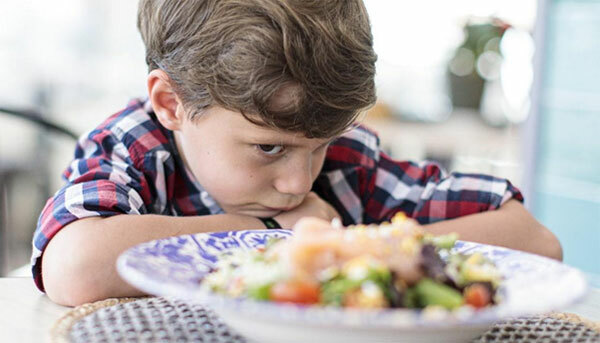
Avoidant/Restrictive Food Intake Disorder: What you need to know about the 'silent eating disorder' ARFID
ARFID is the newest addition to the clinically recognised eating disorders in the Diagnostic and Statistical Manual of Mental Disorders (DSM), and remains severely under-recognised. This insightful piece outlines some of the warning signs and some tips for supporting someone with ARFID.
“What I've found is that if you can look at a person's relationship with food, you can look at their relationship with everything," she said. "It's so fundamental to well-being to have a good relationship with food." ARFID isn't something kids just grow out of, so it is important to approach it with as much sympathy and compassion as possible, he added.”