
Updates from our AGM
Our EDANZ AGM was held online on 20 June and was a great opportunity to reflect on the amazing mahi EDANZ have done this year. It was also noted that donations were down in the past 12 months and with no regular income stream, the team was going to have to look very carefully at expenditure going forward, in order to continue to provide our service.
The EDANZ Board was elected for the next year with a couple of changes: The amazing Wiebke Gailer has stepped down as Board Chair. Wiebke’s passion and warmth have inspired many of us on the EDANZ team, and we are incredibly grateful for her leadership over the past two years. She has agreed to stay on in the Deputy Chair role.
It is incredibly exciting to be welcoming a new Board Chair – Megan Tombs. Megan has been a very active EDANZ volunteer for the past three years. Her energy, optimism, and can-do attitude are contagious and we are certain that Megan will lead EDANZ from strength to strength.
Finally, we acknowledge all the EDANZ Board members and volunteers. Your generosity and dedication are the lifeblood of EDANZ. Ngā mihi nui o te mahi.
EDANZ Board for 2024/25: Megan Tombs (Chair), Wiebke Gailer (Deputy Chair), Kaye Adams, Andrea Bonetto, Nina Gray
Treasurer: Walter Smith
Board Secretary/Website/Admin: Virginia Cattell

Can you help EDANZ "go to the ball"?
We're seeking fairy godparents, aka sponsorship, to attend the important ANZAED Conference in August
This August, the 2024 Australia & New Zealand Academy for Eating Disorders (ANZAED) conference will be taking place in Tāmaki Makaurau Auckland. These annual conferences bring together researchers, clinicians, and other eating disorder professionals to advance prevention, treatment, and advocacy across our two countries.
EDANZ are keen that the voice of whānau living with eating disorders is heard at this event. However, as a cash-strapped non-profit, we cannot cover the $825 registration fee required to send at least one representative.
We're asking for sponsors to help EDANZ attend ANZAED 2024... this is THE event for our sector! And it’s here in Aotearoa this year, so we’d ideally like more than one person to be able to attend on home turf.

Your one-off donation will help ensure that our community is heard.
Please donate via our website, noting ANZAED in the reference. We are grateful for contributions of any amount.
Remember: As EDANZ is a registered charity, your donations are tax deductible.


Eating disorders in men and boys
Eating Disorders Victoria have provided a helpful overview of eating disorders in men and boys including risk factors, warning signs, and how to support a male with an eating disorder.
“Unfortunately, many men with an eating disorder delay or avoid seeking help. This can be due to a number of reasons, for example: the stigma of having what many people regard incorrectly as a ‘female illness’, general resistance to seeking medical help, and an unwillingness to seem ‘weak’. In addition, eating disorders in men are often misdiagnosed or undiagnosed by medical practitioners... It is important to note that the treatment services available (such as psychotherapy, nutritional advice and support groups) are effective in treating both men and women, and the prospect of recovery is equally as possible.”
‘Why Sharing My Story Helped Me Recover,’ According to One Man With Orthorexia
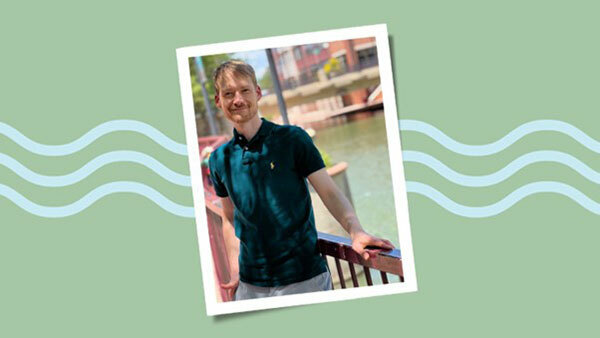
The best way to combat stigma is to talk about it. Here, Jason Wood, an eating disorder advocate and author, shares his story of an eating disorder to help raise awareness and encourage others to seek help.
I think this misconception later led to a delay in the diagnosis and treatment of my eating disorder because I wasn't looking for eating disorder symptoms in myself. My friends and my family weren't looking for them, and I don't even think my medical professionals were really looking for them, either. Oftentimes, I was praised for my dieting and for my exercise when I would go to the doctor for different checkups.


Encourage care professionals to complete eating disorder training
An all-too-common experience among whānau affected by eating disorders is that their calls for help go unheard by health professionals. This experience is invalidating, harmful, and is never okay.
We are so glad to see Whāraurau offering two online eating disorder education courses: one for health professionals and another for anyone who is part of the wellbeing workforce, including counsellors, nurses and frontline care providers. These courses provide introductory training to equip the wellbeing workforce to identify and respond when a person is experiencing an eating disorder.
Eating Disorders | Core Skills for GPs
Eating Disorders | Issues Core Skills for the Wellbeing Workforce
We invite you to encourage your GP, health providers and counsellors at your school, or anyone else who would benefit, to complete this free training.
A huge thank you to Whāraurau. Let’s make sure no one affected by eating disorders is left unseen.