
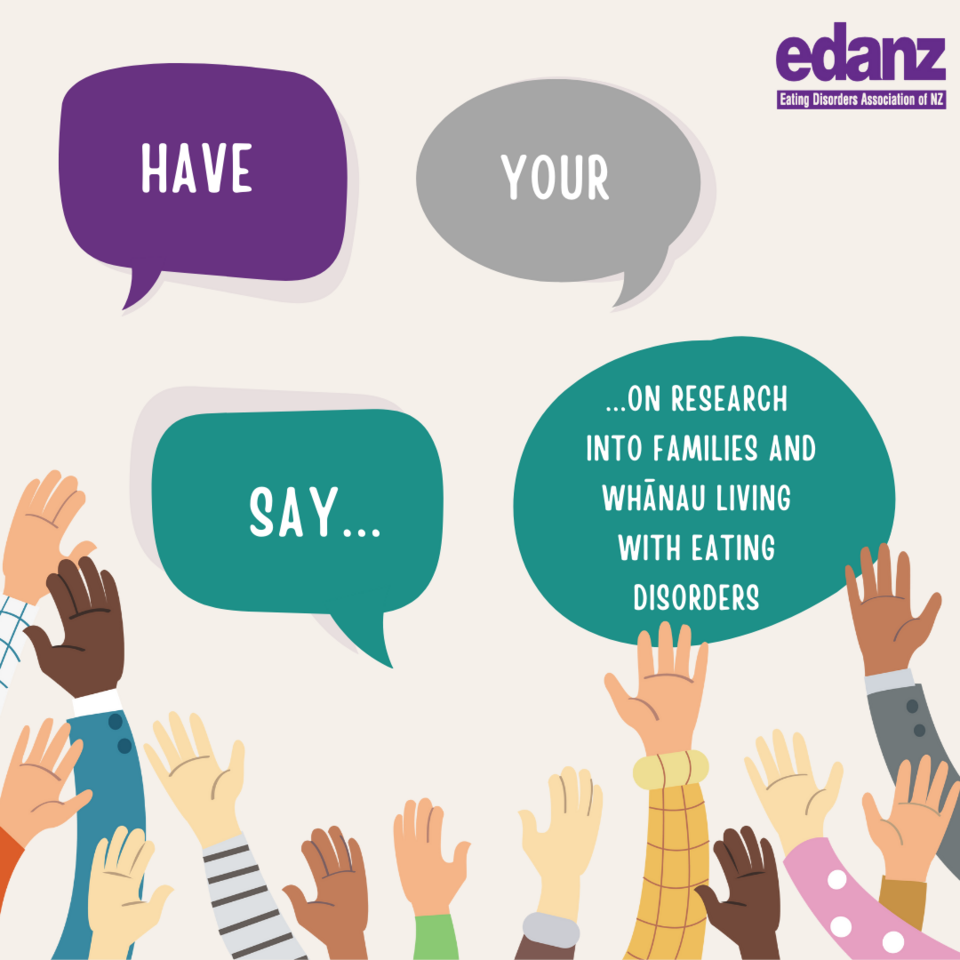
We want you to take part in the EDANZ co-development survey!
Add your voice before 31 May
If you haven’t already, please consider taking part in our very first EDANZ survey.
This survey is the first of its kind in Aotearoa New Zealand, and is the first step in our co-development project. The outcomes will help us work out what the priorities are for future research into carers and supporters of someone with an eating disorder. We want you to have your say!
The survey is open until 31 May. Follow the link for further information and to complete the survey.
If you have any questions, please contact Meg: meg@ed.org.nz
https://forms.office.com/r/kwLYf1CSmF
We acknowledge Joanne Stephenson of Ashburton for her generous bequest to EDANZ for research.
Participate in research conducted by AUT and Eating Disorder Carer Support NZ (EDCS)
AUT and EDCS have teamed up to run a study looking at support for carers of people with eating disorders in Aotearoa. The anonymous survey will take around 20 minutes.
Eligible participants:
- Are over the age of 18
- Reside in New Zealand
- Are or were the caregiver of a loved one with an eating disorder
Find participant information and the survey here:
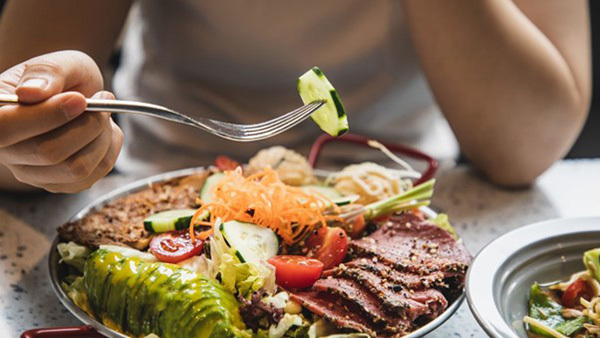
Orthorexia: An eating disorder that few people understand and many accidentally applaud
This article explores the symptoms of orthorexia, the consequences on a person’s life, and what treatment can look like. It is a good reminder that although orthorexia is not yet a formally recognised disorder, there are approaches to treatment that work, and there is hope.
“It might take a fair amount of educating friends
and family members, helping them to have understanding and compassion for why
them commenting about the new juice cleanse they’re on is activating…. And
those in recovery also need to have compassion for themselves.”
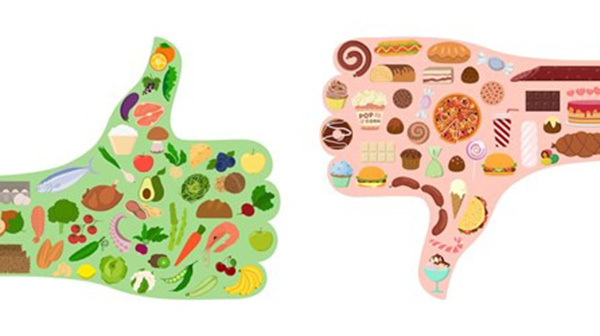
Striving for the ‘perfect’ body led to orthorexia and harsh lessons
Nats Levi shares her personal experience of the rigid and isolating world of orthorexia. Many of us can probably relate to aspects of her journey, as moralising about food is so ingrained in our culture. But she shares an important message – health is about how you feel, not how you look.
“It’s such a distorted view – the orthorexic one. You’ll turn down some delicious rich, dark, anti-oxidant-rich chocolate, just because it’s chocolate. But you’ll eat some horrible, highly processed protein bar…. I distinctly remember a moment when I knew I was better. I was at a family birthday and enjoying a piece cake. Not a “health cake”, just an ordinary sugary chocolate cake, I ate it and liked it.”

‘You Are Not Alone, We’ve Got You’: Power Plays, Devotion, and Punishment on Healthy Eating and Pro-Eating Disorder Websites
This study explores the similarities between the messages promoted on “Healthy Eating” and “Pro-Eating Disorder” websites. While the overt focuses of the websites were different, there were similarities in how the websites made women feel flawed, used “us” and “them” language, and promoted a culture of devotion and restriction. It is research like this that really highlights the blurred line between “clean eating” and an eating disorder.
“By considering these phenomena, the ways in which individuals on online platforms potentially transition from moderate to extreme eating behaviours can be better understood by policy makers attempting to break the cycle of transition from healthy to more pathological forms of eating behaviours.”