


Tips for the Holiday Period
- Come up with a sign that can be used between you and your loved one who is struggling. This will help them communicate to you when they’re in need of support without drawing unnecessary attention to the situation.
- Ask your loved one how they would prefer to be supported in front of others. Christmas is a time when we are often eating in front of people we only see once a year, or once in a while. Extraordinary circumstances call for extraordinary action.
- Explain your situation to visitors and ask people to refrain from any comments about:
- Weight
- Foods that are “good” or “bad”
- How much you ate
- What you’re going to do to “make up for it later”
- Your diet plans for the new year
- If these comments arise during a gathering gently redirect the conversation.
- Try to remember that setbacks during the holidays are fairly normal. They are not always a sign that your loved one has slipped.
- Remember to be kind and compassionate to yourself and your loved one. The holidays are not a joyful time for everyone, and that’s okay. Do your best to support without judgement and reassure your loved one that you are on their side.
(Adapted from @eatingrecovery)

5 tips to help support your loved one with an eating disorder over the Christmas period
Although most of us associate the holiday season with joy and excitement, it can be a particularly challenging time of year for those suffering with an eating disorder. People with eating disorders may experience an increase in stress, anxiety and eating disorder triggers and behaviours due to the amplified focus on food during the festive season. The following article highlights 5 practical ways you can support your loved ones through it.

Challenging All or Nothing Thinking around Food at Christmas
A helpful and practical podcast by a UK therapist who talks about the broader issues of ‘all or nothing’ thinking when it comes to food, particularly with the heightened focus on food, drink and diet over the Christmas period. She also talks about ‘progress not perfection’ and offers practical tips for being aware of this limiting thinking and working through it.
Advice to Support Those with Eating Disorders over Christmas
Another perspective from Beat Eating Disorders UK with joint advice from first-hand experience from clinicians, patients and parents outlining tips that can ease the pressure for those with an eating disorder around Christmas.
Training Opportunity!
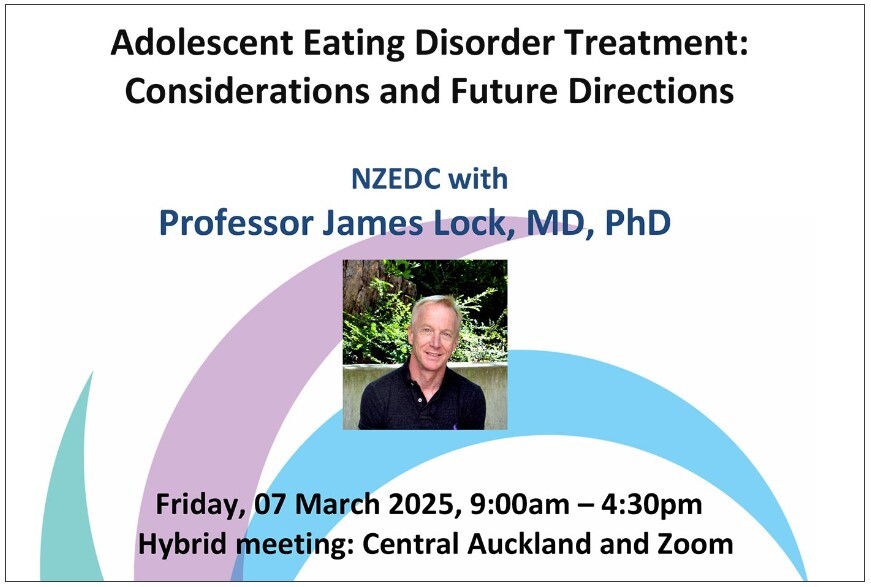
James Lock, MD, Ph.D. Professor of Child Psychiatry and Pediatrics and Associate Chair in the Department of Psychiatry and Behavioral Sciences at Stanford University School of Medicine, author of over 300 articles, abstracts, books and book chapters, including Family Based Treatment for Eating Disorders; Piece by Piece, a Practical Guide for Parents, is presenting at an all-day teaching event in Auckland and on Zoom on 7 March 2025.
The day includes discussions of anorexia and ASD and FBT, FBT with school-age ARFID and cross-cultural implementation of FBT. Other topics will include how the understanding of moderators and mediators of FBT and mechanisms of maintenance of AN informs FBT interventions.
More information on the day and how to register:
https://www.nzeatingdisordersclinic.co.nz/teaching-day-with-prof-james-lock-march-2025/